
















Why Is My Cat Peeing on the Carpet? Causes and How to Stop It


If you’ve noticed your cat is peeing on the carpet or elsewhere in the house, it’s important to note that it’s not a cleanliness issue. Cats are naturally clean creatures and spend around half of their time grooming to make sure they’re as clean as can be!
Instead, when they urinate somewhere undesired, this is usually a sign that something has changed in their daily routine, territory, and toilet facilities.
Generally, cats urinate around 3-5 times a day. You may notice them squatting in their litter tray, followed by a bit of digging and burying. This is normal urination behavior and is different from cat spraying, which has a communication reasoning behind it.
In this article, we’ll explain the most common reasons why your cat is peeing on the carpet and how to help stop it.
Why is my Cat Peeing on the Carpet?
As well as peeing on carpets, urinating outside the litter tray may happen on any other item, such as your bed or sofa or hardwood floors. There are several causes for changes in cats’ toilet behavior, such as:
Underlying medical conditions
If your cat is peeing on the bed or carpet, it’s important to look at their health first. Some common medical issues that could be causing your cat to urinate more than usual or choose a different place to urinate include:
-
Diabetes
-
Thyroid disease
-
Urinary tract issues, such as bladder problems or kidney disease
-
Arthritis
If the litter tray is getting too soiled, they may be urinating outside the tray, or they may be finding it difficult to get to the tray before they pee. If you notice a change in your cat’s toilet habits, always get them checked by a vet, and if your cat is not peeing at all get them checked urgently.
Stress and anxious feelings
Disruptions to a cat’s routine can cause stress and make them feel insecure which can be a common reason why your cat is peeing on the bed or carpet.
Introducing a new cat
If you have introduced a new cat to your home, or if there’s a new neighborhood cat, your resident cat may be feeling stressed or uncertain about how this new addition will affect their daily routine and their use of resources and territory. Therefore, they may be marking their territory by spraying or urinating outside their litter tray.
Redecorating the home
Cats are sensitive to change and may become upset by the packing or moving of furniture, new furniture in general and different smells. Peeing on the carpet or in different areas of the house is their way of showing their discomfort.
If you are planning any major changes around the home, make sure it’s gradual and you provide a safe area for your cat.
Loud noises
Unexpected loud noises like fireworks can scare a cat and cause stress, so if you’re expecting loud noises, make sure they have a quiet place to retreat.
Competition for resources
Cats don't like to share their resources, particularly their toilet facilities, so if you have a multi-cat household, make sure each cat has easy access to their own resources such as, their own food and water bowls, beds, and litter tray in a separate place so there’s no competition.
We also recommend making sure there is enough of these resources for each cat, plus one more to avoid any conflict.
Being left alone
Some cats will pee on the bed or carpet when their routine changes because of their pet parent being away.
If you’re going away for an extended period of time, for example on a holiday, you’ll want to make sure that your cat is familiar with anyone visiting the home to make sure they are well looked after as well as making sure they are fed and that they have enough water. Your cat may become distressed if a stranger enters their territory, which can cause undesired behaviors, such as peeing outside the litter tray.

Territorial marking and cat spraying
A cat typically starts marking its territory when it reaches maturity. This is done by 'spraying' which is often confused with urination.
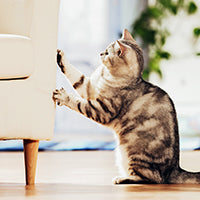
Spraying is used to leave scent signals in the environment to let other cats know that this space is part of their territory. In some cases, visual cues such as scratch marks and scent marks from paws may also be present.
Cats can spray for a number of reasons, including territory marking, social communication, reproductive behavior, or stress. There are many effective steps you can take to stop cat spraying.
Litter tray problems
Litter tray problems are a common cause for cats peeing where they’re not supposed to. These problems are usually related to issues such as tray size, cleanliness, location or litter preferences. Some litter tray tips include:
Tray size
You may have bought a litter tray for a kitten, but once your cat is fully grown, make sure it is still large enough. Cats like to have room to move around and 'dig' when they go to the toilet, so make sure their tray is at least 1.5 times the length of your cat.
Depth
If your kitty likes to dig around when they use their litter tray and cover up after themselves, make sure your litter is deep enough. For most cats, 3-4cm is an ideal depth, but every cat is different so be sure to work to your kitty's preference.
Cleanliness and substrate
Cats don't like using a litter tray where the substrate has not been changed regularly, or they may simply not like the substrate you are using. Often, cats like the substrate they were using as a kitten, so it may be worth finding out what they used previously.
If you decide to switch up the litter used, make sure to do so gradually so that your feline friend has a chance to get used to it. There are many cat litter options such as:
-
Clumping substrates – Most cats prefer a non-scented substrate with a fine consistency, such as clay, as these are very similar to what your cat's ancestors would have chosen in their territories.
-
Non-clumping substrates - Recycled newspaper, coconut husks, sawdust pellets can work well in your cat’s litter tray. Harder substances such as wood pellets or silica gel beads might be more uncomfortable for your cat to use, especially for older cats.
Location
Cats like their toileting to be private, so make sure their litter box is in a discreet place, away from high traffic areas and definitely away from noisy household items, like a washing machine.

How to Stop a Cat Peeing on the Carpet
Now that we’ve covered the causes, it’s important to know how to stop your cat peeing on your bed or carpet. You can use the following solutions to prevent urination on your soft furnishings.
-
Identify recent changes in your home – Try to work out if there have been any changes recently that may coincide with your cat peeing on the carpet or in the home.
-
Have enough resources – Check that they have a comfy bed and a choice of places to hide. If you have a multi-cat household, ensure that there are enough different places to eat, drink and toilet that are separated (one for each cat plus one more!).
-
Make litter trays clean and accessible – Make sure each litter tray is large enough and cleaned regularly. Put multiple trays around the house in quiet areas so your cat can find a spot they prefer.
You can also try moving the tray to where they marked or urinated, as they may feel safer in this area.
For elderly cats, make sure the tray is easy to access and that the sides aren’t too high.
-
Don't use strongly scented cleaners - Cats have sensitive noses and strong smells can make them avoid certain areas.
-
Use calming pheromones – Spray FELIWAY® Classic Spray in areas where your cat has urinated when the surface is clean and dry. Spray once daily on the spots you want your cat to avoid urinating on. FELIWAY® Classic releases happy messages that help cats feel safe, secure and less likely to mark or spray.
-
Keep to a routine – Ensure that you have a predictable routine to reduce stress, and that this routine includes regular play time to provide an outlet for mental and physical stimulation.
-
Reassure them when they’re alone – If you are going to be away for a long period of time, like going on holiday, leave an item of your clothing in their bed. Your scent will reassure them that you will be back soon.
-
Never punish your cat – Do not punish your cat for peeing on the bed or carpet, this will make them anxious and could make the problem worse.

How FELIWAY® Can Help Stop Your Cat Peeing on the Carpet
After working out the reasons why your cat is peeing on your bed or carpet and taking the steps to address them, you can support ongoing calm and comfort for your cat by using the FELIWAY® Optimum diffuser.
FELIWAY® Optimum is an advanced pheromone solution designed to effectively help reduce cats’ signs of stress, which can lead to urination outside the litter tray.
Simply plug it in a room where your cat spends most of their time to help them feel safe, secure, and less likely to mark or spray.
If you’d like to know more advice about managing cat spraying or urinating behaviors, explore our other blogs online! To stay up to date with all our latest news, articles, and products, don’t forget to sign up to our newsletter.